
Welcome to Year 5 - Opal Class
Staff
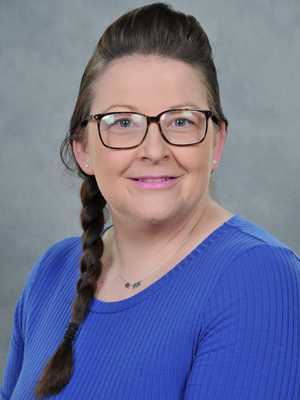
Mrs V Leach
Opal
BA (Hons) PGCE
Hi my name is Mrs Leach and I am the current year 5 teacher in Opal. As well as being a class teacher I am also the school lead on creative arts. One of my big passions is for the creative arts so I ensure this is delivered across the whole school

Mr A Fellows
Opal
PE Day & PE Kit
PE will take place on Thursday.
Please ensure you child comes to school in their PE Kit on that day.
What's New
Download Timetable
Snack Money
Morning snack can be sent from home or purchased from school. Anyone buying snack from school must commit to the whole week and pay via ParentPay on Monday morning before 8:30am. The maximum amount snack will cost is £2.50 per week. There is also an option to pay for the whole term.
Reading Books
Reading Books will usually be changed Tuesday and Friday. Please read with your child every night. I will check reading records each morning.
Knowledge Organiser
You have been given a Knowledge Organiser and Homework Grid with some tasks relating to our topic.
Each week we will have a focus that has been covered on the Knowledge Organiser.
Homework
Children will get up to 15 spellings per week to learn at home which should be handed in every Friday.
Children must read at least 3 times per week at home. If children read each night totaling 5 times per week then a weekly reward is given.
Termly homework activities grid - see link below for tasks. Rewards are given for the completion of any homework tasks on the topic homework sheets.
Recent Terms Archive
Welcome to Opal Class
Overview
Class Topics For Each Half Term
Topic
Themes to be explored
Autumn 1:
Mexico
+ Black History Month
This is a geography topic where the children will study Mexico as a non-European country. They will use maps, atlases and digital resources to locate Mexico and investigate its diverse landscapes, climate, regions and settlements. The children will learn about the physical and human features that make Mexico unique and explore how geography influences the lives of the people who live there. They will compare aspects of life in Mexico with those in the United Kingdom, developing their understanding of similarities and differences between countries whilst gaining an appreciation of Mexico's rich culture and traditions. In science, the children will investigate the properties of materials, comparing and grouping materials according to their characteristics and carrying out practical investigations to discover why particular materials are chosen for specific purposes. In mathematics, the children will develop their understanding of place value by reading, writing, comparing and ordering numbers up to 1,000,000 and exploring the value of each digit within a number. In our writing lessons, the children will be inspired by traditional Mexican stories, myths and legends. They will retell and adapt familiar tales before creating their own narrative writing, developing their use of descriptive language and storytelling techniques. During Black History Month, they will also write diary entries to explore events and experiences from different perspectives. Throughout the term, there will be a strong focus on handwriting, helping children to develop fluency, consistency and pride in the presentation of their work.
Links to support learning: Geography
Autumn 2:
Northern Exposure
This is a geography topic where the children will study Denmark and develop their understanding of how countries can be compared geographically. Using maps, atlases and digital resources, they will locate Denmark within Europe and explore its physical and human features, including its landscapes, climate, settlements and population. The children will compare life in Denmark with life in Warrington, considering aspects such as land use, transport, culture, housing and the environment. Through geographical enquiry, they will investigate similarities and differences between the two locations and develop a deeper understanding of how people interact with and adapt to their surroundings. In science, the children will explore changing materials, investigating reversible and irreversible changes and learning how materials can change state or be transformed through different processes. They will carry out practical investigations, make careful observations and develop their ability to explain their findings using scientific vocabulary. In mathematics, the children will strengthen their addition and subtraction skills, applying formal written methods with increasingly large numbers and using these skills to solve a variety of multi-step problems and real-life contexts. In our writing lessons, the children will be inspired by the work of the famous Danish author Hans Christian Andersen. They will explore a range of his traditional tales, analysing characters, themes and language before creating their own narratives. The children will also develop their poetry skills by studying, performing and writing a variety of poems, focusing on imagery, vocabulary choices and figurative language. Throughout the term, there will be an emphasis on editing and improving writing, helping children to create imaginative and well-structured pieces whilst continuing to develop their handwriting and presentation skills.
Links to support learning: Geography
Spring 1:
The Vikings
This is a history topic where the children will learn about the Vikings and their impact on Britain. They will investigate who the Vikings were, where they came from and why they chose to leave their homelands to travel across Europe. Using a range of historical sources, the children will explore Viking raids and settlements, discover what daily life was like, and learn about the lasting influence the Vikings had on language, place names and culture in Britain today. They will develop their skills as young historians by asking questions, examining evidence and considering how our knowledge of the past has been built from different sources. In science, the children will study Earth and Space, learning about the movement of the Earth and other planets within our solar system. They will explore how the Earth rotates on its axis, understand how day and night occur, and investigate the relationship between the Earth, Moon and Sun. Through observation, research and enquiry, they will deepen their understanding of the universe around them. In mathematics, the children will build confidence with multiplication, exploring a range of written and mental calculation strategies whilst developing their understanding of multiples, factors and related mathematical concepts. They will also apply subtraction methods to increasingly challenging calculations and problems, using key mathematical vocabulary to explain their reasoning and justify their answers. In our writing lessons, the children will develop their journalistic skills by creating newspaper reports about significant Viking events and discoveries. They will also practise retelling historical stories and accounts, focusing on clear organisation, engaging language and accurate use of grammar and punctuation. Through these activities, the children will develop their ability to write for different purposes and audiences whilst extending their historical knowledge.
Links to support learning: History
Spring 2:
This is a literacy-based topic where the children will explore the work of a range of authors and use drama activities to inspire and develop their creative writing. Through studying high-quality picture books, they will analyse how authors create memorable characters, engaging settings and exciting storylines. Drama techniques such as role play and hot-seating will help the children explore characters' thoughts and feelings, giving them the confidence to write increasingly imaginative and detailed fictional stories.
In science, the children will study living things and their habitats. They will learn about the life cycles of mammals, amphibians, insects and birds, compare different methods of reproduction, and investigate how living things are classified according to their characteristics. Through observation and enquiry, they will develop a deeper understanding of the natural world.
In mathematics, the children will begin by studying graphs and data handling, learning how to interpret, construct and analyse a range of charts and graphs. They will then move on to fractions, developing their understanding of equivalent fractions, comparing and ordering fractions, and applying their knowledge to reasoning and problem-solving activities.
In our writing lessons, the children will use the books and characters they have explored to create their own fictional stories. They will focus on developing characters, using ambitious vocabulary and crafting engaging narratives that capture the reader's imagination.
Links to support learning: Literacy
Summer 1:
Warrington’s war - WW2
This is a history topic where the children will explore the impact of the Second World War on Warrington and the local area. Using a range of historical sources, photographs and personal accounts, they will discover what life was like for local people during wartime, including the challenges faced on the home front. The children will develop their skills as historians by investigating how the war affected everyday life and examining the experiences of those who lived through this significant period in history.
In science, the children will study forces, investigating how different forces act on objects and affect their movement. Through practical investigations, they will explore concepts such as gravity, friction, air resistance and water resistance, developing their scientific enquiry skills and understanding of how forces are used in everyday life.
In mathematics, the children will develop their understanding of decimals and percentages, learning how to compare, order and calculate with decimal numbers and make links between fractions, decimals and percentages. They will apply their knowledge through a range of reasoning and problem-solving activities.
In our writing lessons, the children will use their historical knowledge to create diary entries and letters based on the experiences of local people during the Second World War. They will focus on writing from different perspectives, using historical details to create authentic and engaging pieces that bring the experiences of wartime Warrington to life.
Links to support learning: History
Summer 2:
This is a geography topic where the children will study coastal environments and explore how people use and protect these important landscapes. Through the theme Beside the Seaside, they will investigate the physical and human features of coastal areas, examine different types of land use, and learn about the causes and effects of coastal erosion. The children will explore a range of methods used to protect coastlines and consider how these help to preserve both the natural environment and local communities. As part of the topic, they will visit the seaside to experience the beach environment first-hand and observe the physical and human features they have been learning about in the classroom.
In science, the children will study animals, including humans. They will learn about the changes that occur as humans grow and develop, including puberty, and explore how the body changes from infancy through to old age. The children will also consider the importance of maintaining a healthy lifestyle and wellbeing as they grow.
In mathematics, the children will develop their understanding of area, perimeter and volume, learning how to calculate and apply these measurements in a range of practical contexts. They will also strengthen their knowledge of measurement, using and converting between different units while solving a variety of reasoning and problem-solving challenges.
In our writing lessons, the children will use their geographical learning and experiences from the seaside visit to inspire a range of writing opportunities. They will create informative and descriptive pieces that demonstrate their understanding of coastal environments, while continuing to develop their vocabulary, organisation and writing techniques in preparation for their move to Year 6.
Links to support learning: Science
To view other curriculum subjects please click on the links below: